
The Best Exercise for Perimenopause: Why Strength Training (and Protein) Come First
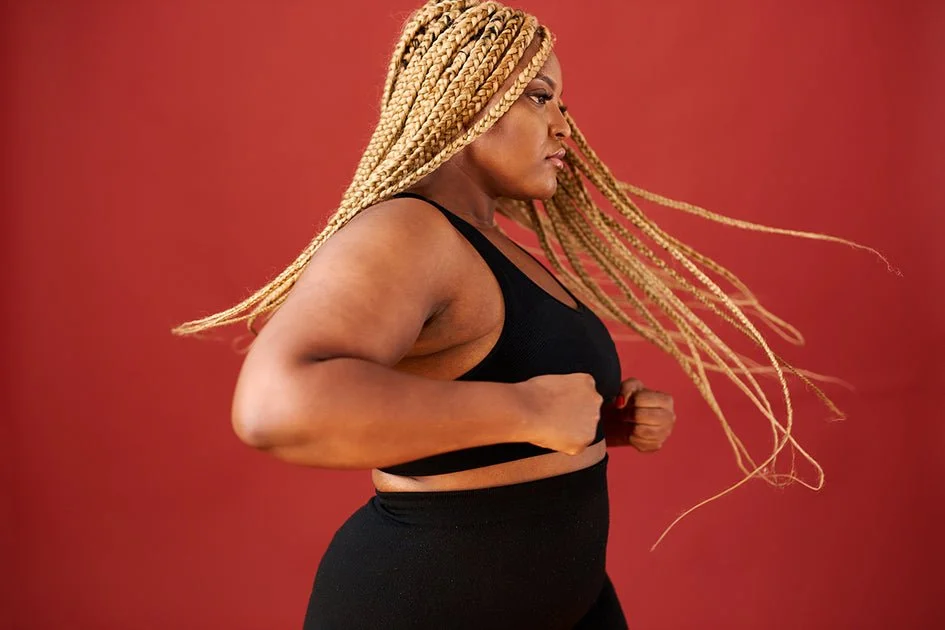
Perimenopause can feel like your body changed the rules without telling you. Same workouts, same meals, but your energy dips, your sleep gets choppy, your clothes fit differently, and your midsection seems to have a mind of its own.
You're not imagining it, and you're not doing anything wrong. Perimenopause brings real hormonal shifts that affect your muscle, your bones and where your body stores fat. The good news: you have more control than you've been told. The most effective tool is strength training, backed by enough protein.
What is perimenopause?
Perimenopause is the transition leading up to menopause, which is officially one full year without a period. According to Cleveland Clinic, perimenopause usually begins in your mid-40s, but it can start as early as your mid-30s. It lasts about four years on average, and can last up to eight.
Common signs include:
Irregular, heavier or lighter periods
Hot flashes and night sweats
Trouble sleeping
Mood changes, including irritability and anxiety
Changes in body composition, especially around the belly
What perimenopause does to your muscle, bones and body composition
As estrogen fluctuates and declines, three things tend to happen:
Muscle loss speeds up. Losing muscle (called sarcopenia as it progresses) affects your strength, balance and metabolism.
Bone density starts to drop. Estrogen protects bone, so as it falls, your risk of osteopenia and osteoporosis rises.
Fat shifts to your middle. Many women notice more abdominal fat, even when their weight barely changes.
Here's the part most women never hear. The Study of Women's Health Across the Nation (SWAN), which has followed thousands of women through midlife, found that about two years before the final period, the rate of fat gain doubles and lean muscle mass starts to decline. Those changes continue until about two years after menopause, then level off.
Two big takeaways:
Perimenopause is the window. What you do in these years shapes your body for decades.
The scale hides what's happening. In SWAN, fat gain and muscle loss partly cancelled each other out on the scale. That's why we track body composition, not just weight.
Why strength training is the best exercise for perimenopause
Walking, yoga and cardio all have their place. But if you're going to prioritize one type of exercise in perimenopause, make it strength training. Here's what it does:
Preserves and builds lean muscle. Strength training stimulates muscle protein synthesis, directly countering the muscle loss that speeds up in perimenopause.
Protects your bones. Bone responds to load. In the LIFTMOR trial, postmenopausal women with low bone mass who did supervised, progressive heavy strength training gained spine bone density. Read how one Fit In member did the same in Improving Muscular Strength and Endurance Slows Bone Density Loss.
Supports your metabolism. Muscle is active tissue. Keeping it helps offset the metabolic slowdown that comes with age.
Improves balance and posture. Stronger muscles mean better stability and fewer falls.
Lifts your mood. Exercise, including strength training, can help ease the anxiety and low mood many women feel during perimenopause.
What about perimenopause belly fat?
Rising abdominal fat is one of the most common frustrations of perimenopause, and one of the most searched. The honest answer: you can't spot-reduce belly fat with crunches. What works is changing your overall body composition:
Build muscle across your whole body with compound lifts: squats, deadlifts, rows and presses.
Eat enough protein to support that muscle (see below).
Protect your sleep and manage stress, both of which affect where your body stores fat.
Track body composition with an InBody scan instead of the scale, so you can see fat mass drop and muscle mass rise.
For the full picture on building muscle and losing fat at the same time, see Resistance Training for Body Recomposition: A Strength-First Guide for Women.
Don't skip your pelvic floor
Perimenopause can also bring bladder leaks when you cough, sneeze, laugh or jump. It's common, and it's very trainable. A Cochrane review, the gold standard for summarizing research, found that women with stress urinary incontinence who did pelvic floor muscle training were about six times more likely to report cure or improvement than women who didn't (74% vs. 11%).
Pilates is a natural fit here. Our Pilates mat and reformer classes train your deep core and pelvic floor together, which also supports your heavier lifting. If leaks are affecting your daily life, talk to your doctor or a pelvic floor physical therapist too.
A perimenopause exercise plan
Here's a simple weekly structure to build from:
2–3 strength sessions. Full-body movements: squats, lunges, deadlift patterns, push-ups, rows and planks. Use dumbbells, kettlebells or bands. Progress over time by adding weight or reps as moves get easier. At The Fit In, start with Strong: Fundamentals to learn the moves, then build with Strong, Lift & Length and Stronger.
1–2 Pilates or mobility sessions for core, pelvic floor, posture and balance.
Daily movement. Walking, stairs and anything that keeps you moving between workouts.
At least 1 full rest day. Recovery is when your muscles rebuild.
New to strength training? Start with 2 days a week and build up. We recommend at least five Strong: Fundamentals classes before joining Pilates Mat: Strong.
Protein: the nutritional foundation
Protein is crucial in perimenopause to preserve muscle mass and support your overall health. Most women underestimate how much they need.
Calculate your protein needs. A good starting point is 0.75 to 1 gram of protein per pound of lean body mass per day. To find your lean body mass, get a body composition analysis like an InBody scan. For example, if you weigh 150 lbs and have 25% body fat, your lean body mass is about 113 lbs, so aim for about 84–113 grams of protein a day.
If you don't know your lean mass yet, research suggests about 1.6 grams per kilogram of total body weight per day (about 0.7 grams per pound) maximizes the muscle you build from strength training. For a 150-lb woman, that's about 110 grams a day.
Spread it across your meals. Aim for 25–40 grams of protein per meal, and include a source of protein in every meal and snack.
Time it around your workouts. Have 20–30 grams of protein within an hour or so of strength training to support recovery.
Choose quality sources:
Animal-based: chicken, turkey, lean beef, eggs, Greek yogurt, cottage cheese, and fish like salmon, tuna and sardines
Plant-based: tofu, tempeh, edamame, lentils, chickpeas, quinoa and chia seeds
Supplements: whey or pea protein powders. Collagen is not a complete protein on its own, so don't count on it for muscle building.
Protein also keeps you fuller for longer, which makes it easier to eat in a way that supports your goals.
Carbs: focus on quality, not elimination
Changes in insulin sensitivity during perimenopause can make blood sugar harder to manage for some women. You don't need to cut carbs to build strength. In fact, carbs fuel your training. What helps most is choosing better carbs and pairing them with protein:
Lean on high-fiber carbs like vegetables, beans, berries and whole grains.
Cut back on refined carbs and sugary snacks, which can spike and crash your energy.
Put your starchier carbs around your workouts, when your body uses them best.
For a plan tailored to you, especially if you have diabetes, prediabetes or another medical condition, work with a registered dietitian.
FAQ
What is the best exercise for perimenopause? Strength training. It protects the muscle and bone that perimenopause puts at risk, supports your metabolism and helps with body composition. Pair 2–3 strength sessions a week with Pilates or mobility work and daily walking.
Can strength training help perimenopause belly fat? Strength training can't spot-reduce your belly, but building muscle across your whole body, eating enough protein, sleeping well and managing stress all shift your overall body composition, including around your middle.
How often should I exercise during perimenopause? Aim for 2–3 strength sessions, 1–2 Pilates or mobility sessions, daily movement and at least one rest day each week. Start with 2 strength days if you're new.
Are pelvic floor exercises worth it in perimenopause? Yes. Research shows pelvic floor muscle training significantly improves stress urinary incontinence. Pilates is a great way to build pelvic floor strength along with your core.
How much protein do I need in perimenopause? About 0.75–1 gram per pound of lean body mass, or roughly 1.6 grams per kilogram of total body weight. For most women, that's around 90–130 grams a day.
Start strong
Perimenopause is a turning point, and with the right plan it can be the start of the strongest version of you. At The Fit In, we'll help you build it with coaching, community, and body composition data that shows what the scale can't.
Book an InBody scan to get your baseline lean mass and your protein target.
Take a strength class in Bed-Stuy, Crown Heights or East New York.
Want a plan built around you? Book a private session →
Related: My Journey With Early Menopause and Things You Should Know
This article is for educational purposes and isn't medical advice. Talk to your doctor before starting a new exercise or nutrition program, especially if you have a medical condition.
Sources
Greendale GA, et al. Changes in body composition and weight during the menopause transition. JCI Insight, 2019. SWAN summary
Cleveland Clinic, Perimenopause: Age, Stages, Signs, Symptoms & Treatment
Dumoulin C, et al. Pelvic floor muscle training versus no treatment, or inactive control treatments, for urinary incontinence in women. Cochrane Database of Systematic Reviews, 2018. Cochrane
Watson SL, et al. The LIFTMOR Randomized Controlled Trial. Journal of Bone and Mineral Research, 2018. PubMed
Morton RW, et al. Protein supplementation and resistance training meta-analysis. British Journal of Sports Medicine, 2018. PubMed