
Mobility vs. Flexibility: What's the Difference, and Which One Do You Need?
You can touch your toes. So why does getting up off the floor feel like a project? Why does your shoulder pinch when you reach for the top shelf?
Because flexibility and mobility aren't the same thing. Most of us have spent years stretching for one and wondering why we didn't get the other.
Here's the difference, two quick tests to see where you stand, and how we train both at The Fit In.
The short answer: Flexibility is how far a muscle can be stretched, often with help from gravity, a strap or a partner. Mobility is how far you can move a joint on your own, with control and strength. Flexibility is the range you have. Mobility is the range you can actually use.
What is flexibility?
Flexibility is the ability of a muscle and its connective tissue to lengthen. It's usually measured passively: something other than your own muscles does the work. Think of a hamstring stretch where you pull your leg toward you with a strap, or sinking into a split.
Flexibility is useful. It gives your joints room to move. But on its own, it's range without control.
What is mobility?
Mobility is the ability to move a joint through its range of motion actively, using your own strength. It depends on three things working together:
Flexibility: the muscles around the joint can lengthen.
Strength: you have enough strength to move into that range and hold it.
Control: your nervous system knows how to coordinate the movement.
Raise your leg straight in front of you without using your hands. How high it goes is your mobility. Now pull it higher with your hands. That extra distance is flexibility you can't yet control.
Mobility vs. flexibility at a glance
Flexibility is passive. Mobility is active.
Flexibility is about the muscle. Mobility is about the whole joint: muscles, tendons, the joint capsule and your nervous system.
Flexibility is built mainly by stretching. Mobility is built by moving through range with strength and control.
Flexibility shows up in a stretch. Mobility shows up in your life: squatting to pick up a toddler, reaching overhead, getting up off the floor, climbing brownstone stairs.
Why mobility matters more as you get older
Range you don't use, you lose. Long days of sitting, fewer reasons to squat, reach or get down on the floor, and the natural loss of muscle with age all shrink the range we can actually control. For women, the drop in estrogen around perimenopause and menopause adds stiffness and joint aches on top of that. More on that in our guide to strength training for menopause.
The good news: mobility is trainable at any age. And you don't build it by stretching alone.
The surprise: strength training improves range of motion as much as stretching
A 2021 systematic review and meta-analysis compared supervised strength training against stretching in randomized trials. Strength training and stretching were not different in how much they improved range of motion. The researchers noted the studies varied a lot, so more research is needed, but the takeaway is clear: lifting through a full range of motion builds range of motion.
That's why at The Fit In we don't treat mobility as the cooldown you skip. We load it. Kettlebells, springs and slow, controlled reps teach your body to own the range it has, and then earn more.
Test yourself: two 60-second mobility checks
You don't need equipment for these. Move slowly, and stop if anything hurts.
1. The active vs. passive leg raise (hips and hamstrings)
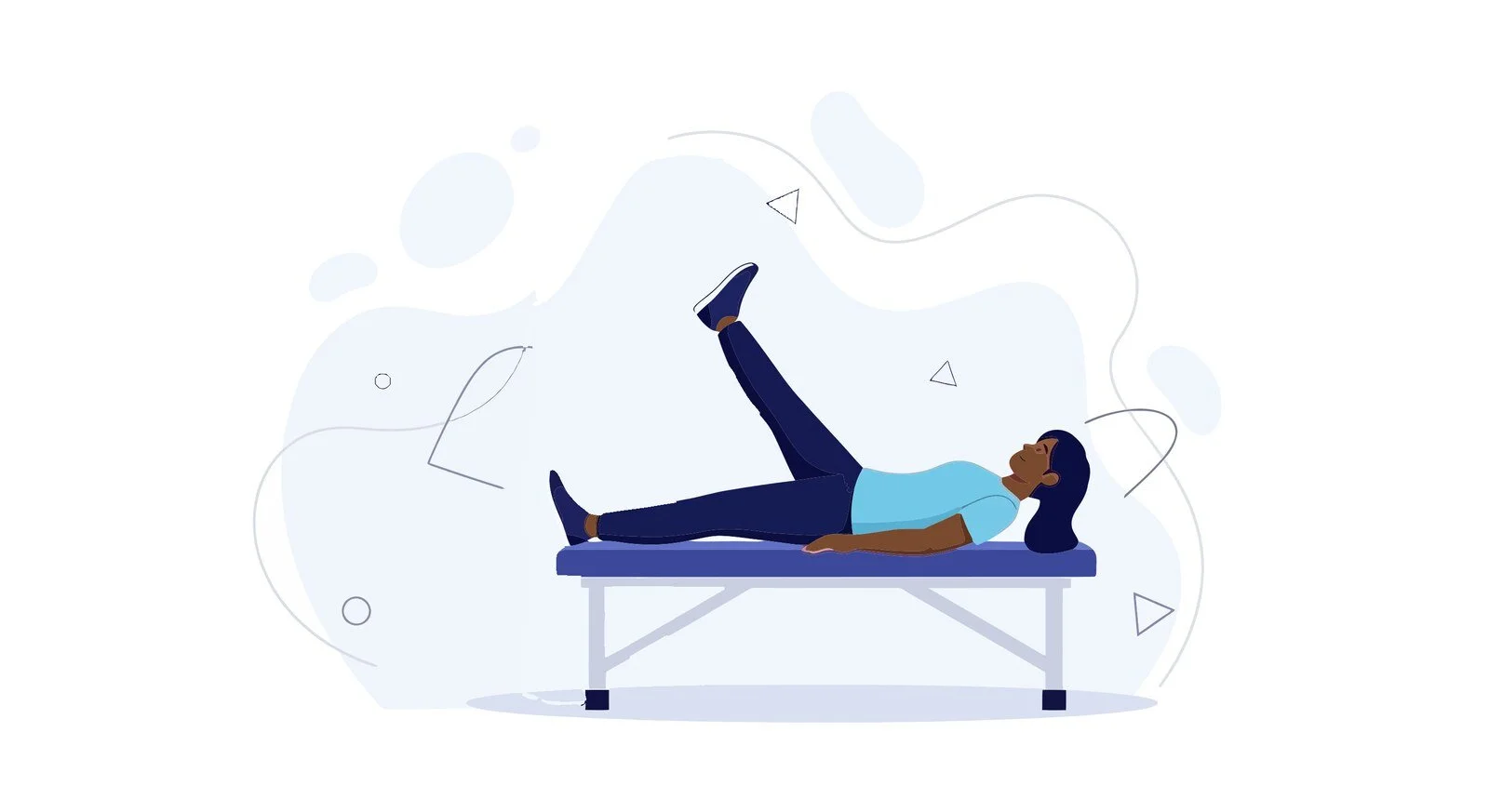
Lie on your back with both legs straight.
Keeping your knee straight, lift one leg as high as you can without using your hands. Notice where your foot stops.
Now use your hands or a strap to gently pull the same leg higher. Notice the new spot.
Repeat on the other side.
What it tells you: the gap between the two positions is your flexibility-to-mobility gap. A big gap means you have range you can't yet control. That's where strength work in end range pays off.
2. The wall reach (shoulders and upper back)
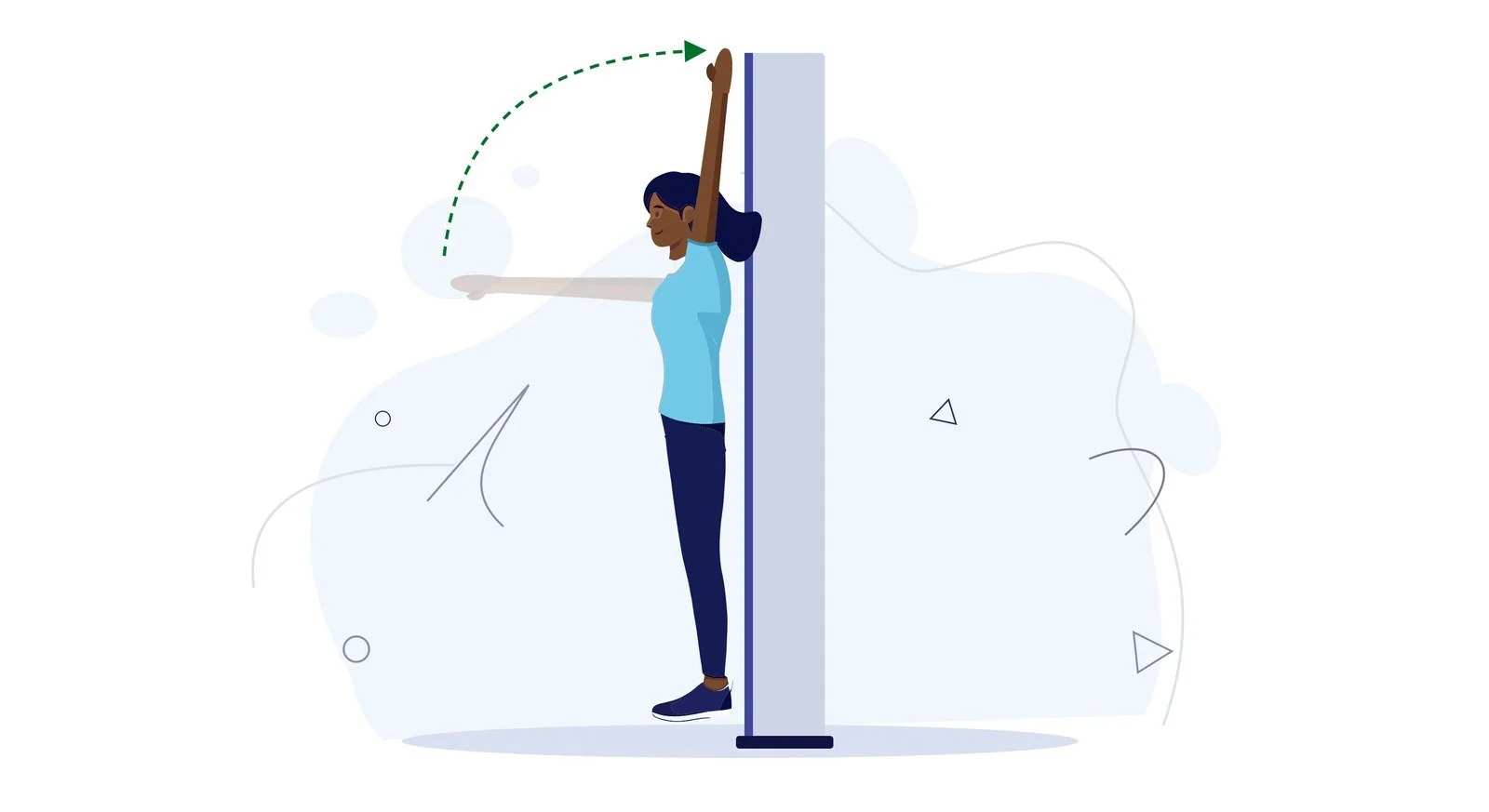
Stand with your back against a wall, heels a few inches away, with your low back, upper back and head touching the wall.
Keeping your elbows straight and your ribs down, raise both arms forward and overhead, trying to touch the wall behind you with your thumbs.
What it tells you: if your arms stop short, or your low back arches off the wall to get there, your shoulders and upper back are short on mobility. You'll feel it every time you reach for a high shelf or press a weight overhead.
Pain, numbness or a joint that suddenly won't move is different from stiffness. If that's you, check in with your doctor or a physical therapist first.
How to train mobility (not just flexibility)
1. Move through full range, with control
Slow down. Lower into the bottom of a squat, a lunge or a hip hinge over 3–4 seconds, and pause there. Range you can control under a little load is range you keep.
2. Try controlled articular rotations (CARs)
Controlled articular rotations, or CARs, are slow, deliberate circles of a single joint through the biggest pain-free range you can manage, while the rest of your body stays still. They were popularized by the Functional Range Conditioning system, and they're a simple daily check-in for your hips, shoulders and spine.
How to do a hip CAR: stand tall holding a wall. Lift one knee in front of you, open it out to the side, rotate it behind you, and bring it back down, drawing the biggest circle you can without your pelvis or torso moving. Do 3 slow circles each way, on each side.
3. Add load at end range
Once you can control a position, make it harder. A kettlebell halo around the head builds shoulder mobility. A slow goblet squat with a pause at the bottom builds hip and ankle mobility. On the reformer, the springs do the same job: they support you into a position, then challenge you to control it.
4. Keep stretching, in its place
Stretching still matters. It feels good, it helps you recover, and it buys you range that strength work can then lock in. Pair the two: stretch to find the range, strengthen to keep it.
5. Be consistent, not extreme
10 minutes most days beats one heroic session a week. Mobility responds to frequency.
A simple weekly mobility plan
Daily (5–10 minutes): hip, shoulder and spine CARs, plus one stretch you need most.
2–3 times a week: strength training through full range of motion. Strong: Fundamentals is a great place to start.
1–2 times a week: a dedicated mobility class. Lift & Length for loaded mobility with kettlebells, Length for deep stretching plus strength, or Stretch & Release when you need to recover.
Train mobility with us in Bed-Stuy
Our mobility classes live at Beats & Barres, 304 Malcolm X Blvd:
Lift & Length (Saturdays, 10am): kettlebell strength, loaded mobility and functional movement (hinges, squats, carries). Performed barefoot. Open level.
Length: deep stretches, joint mobility work and targeted strength in one full-body class.
Stretch & Release: guided stretching with foam rollers and straps to release tight muscles and help you recover.
Stretch & Release and Length are $25, Lift & Length is $30, and new clients get 2 classes for $30. See the schedule for this week's times.
See our stretch and mobility classes →
FAQ
What's the difference between mobility and flexibility?
Flexibility is how far a muscle can be stretched, often with outside help like gravity or a strap. Mobility is how far you can move a joint on your own, with strength and control. Flexibility is the range you have. Mobility is the range you can use.
Is mobility or flexibility more important?
For everyday life, mobility. It's what lets you squat, reach and get up off the floor with control. But flexibility feeds mobility, so the best plan trains both.
Is stretching the same as mobility work?
No. Stretching mostly builds passive flexibility. Mobility work adds strength and control, so you can actively use your range. Slow strength training through full range, CARs and loaded mobility drills all count.
Can strength training improve flexibility?
Yes. A 2021 meta-analysis of randomized trials found strength training improved range of motion about as much as stretching did. The key is training through a full range of motion.
How long does it take to improve mobility?
Many people notice a difference within a few weeks of consistent practice. Short daily sessions plus 2–3 strength workouts a week work better than one long session.
What are CARs in mobility training?
CARs, or controlled articular rotations, are slow circles of one joint through its biggest pain-free range while the rest of the body stays still. They train control at the edges of your range.
Can you improve mobility after 50?
Yes. Mobility is trainable at any age. Strength training through full range and regular mobility practice help you keep and rebuild range you've lost.
This article is for educational purposes and isn't medical advice. If you have pain or an injury, talk to your doctor or a physical therapist before starting a new exercise routine.
Sources
Afonso J, et al. Strength Training versus Stretching for Improving Range of Motion: A Systematic Review and Meta-Analysis. Healthcare, 2021; 9(4):427. Full text